AI isn’t just changing how businesses work; it’s flipping the script for the entire electronics industry. What gets built? Where do the parts go? How much muscle do manufacturers need? Everything’s up for grabs.
AI data centers are hungry beasts. They gobble up processors, memory, power parts, networking gear, circuit boards…you name it. The more money is poured into AI, the bigger this hardware appetite grows.
That’s great for AI, but for traditional OEMs? It’s a scramble. Suddenly, they’re in a supply chain cage match with some of the world’s biggest buyers.
Is AI taking all the chips? Not quite, but it’s sure eating a massive slice of the pie. This AI gold rush is shaking up who gets what in the world of semiconductors, and everyone in electronics manufacturing is feeling the heat.
The takeaway for OEMs is straightforward: component planning, accurate forecasting, and early supplier communication are becoming increasingly important.
AI Data Centers Are Creating Enormous Demand for Hardware
AI models require substantial computing power. Training and running them at scale takes specialized processors, high-bandwidth memory, networking hardware, storage, and advanced power and cooling systems.

That demand is translating into major investments in semiconductor manufacturing and data center infrastructure.
According to the International Energy Agency (IEA), global data center electricity consumption reached approximately 415 terawatt-hours (TWh) in 2024, representing about 1.5% of worldwide electricity consumption. The IEA projects that figure could more than double to approximately 945 TWh by 2030, with AI identified as a major driver of growth.
The IEA also reported that global investment in data centers reached approximately $500 billion in 2024, nearly double its level in 2022. That’s a significant amount of infrastructure being built, and every new facility requires hardware to support its computing, networking, storage, and power needs.
Sources: International Energy Agency, Energy and AI and IEA Executive Summary.
Electricity consumption is not a direct measure of chip demand, but it illustrates the scale of the infrastructure expansion. For electronics manufacturers, the important question is what all that infrastructure needs and how the resulting demand affects component availability.
Which Electronic Components Are Most Exposed?
Not every component is experiencing the same level of pressure. Supply conditions vary by manufacturer, product category, specification, and production capacity. However, several areas deserve close attention.
1. Memory: AI Demand Is Driving Significant Price Increases
AI accelerators need fast memory to move large amounts of data efficiently. High-bandwidth memory (HBM) has become a particularly important part of advanced AI systems.
HBM production requires specialized manufacturing processes and advanced packaging. Expanding capacity takes time, and manufacturers must balance investment in high-demand products with the rest of their portfolios.
The pricing impact is already measurable.
According to TrendForce’s September 30, 2026 market forecast, conventional DRAM contract prices are projected to increase 10% to 15% quarter-over-quarter in Q4 2026, while NAND flash contract prices are projected to rise 15% to 20%. TrendForce attributes the continued pressure in part to memory manufacturers prioritizing advanced capacity for high-performance server products as AI infrastructure demand grows.
Source: TrendForce, September 30, 2026.
These are market-wide contract-price forecasts, not guaranteed increases for every component or individual buyer. Still, they demonstrate how demand from data centers can influence the cost of memory used across the broader electronics market.
The impact isn’t limited to advanced AI chips. When manufacturers shift production capacity toward higher-demand products, supply conditions can tighten in other segments. OEMs using conventional memory may find themselves facing higher quotes, changing availability, or shorter windows to secure inventory.
What OEMs should do: Identify memory components that are difficult to substitute, confirm lifecycle status, and discuss allocation risks with suppliers before placing production orders.
2. Semiconductors: More Competition for Manufacturing Capacity
AI infrastructure depends on advanced processors, but the semiconductor industry also supplies microcontrollers, power-management ICs, analog devices, interface chips, and other components used in everyday electronic products.
These devices do not all compete for the same manufacturing lines. Advanced AI processors and mature-node microcontrollers, for example, use different processes and may face very different supply conditions.
Still, semiconductor capacity is not infinitely flexible. Expanding a fabrication plant, qualifying a new process, or bringing an alternative component into production can take substantial time and investment.
When demand grows quickly, the resulting supply constraints can affect particular products, manufacturers, or production processes. That matters when an OEM depends on a specific integrated circuit with limited sourcing options.

Even if a component costs only a few dollars, its absence can hold up an entire assembly.
What OEMs should do: Review the bill of materials (BOM) for single-source components, extended lead times, end-of-life notices, and parts that lack qualified alternatives.
3. Power Components: The Infrastructure Behind AI
AI servers require substantial electrical infrastructure. Power supplies, voltage regulators, power-management semiconductors, conversion equipment, and related components help deliver stable power to high-performance computing systems.
At the facility level, data centers also need electrical distribution and backup power equipment. These products are not interchangeable with every component used in an electronic assembly, but the broader infrastructure buildout can increase demand across certain power-related supply chains.
The IEA’s outlook reinforces the scale of this challenge. Its base-case projection shows data center electricity consumption growing by approximately 15% annually between 2024 and 2030. Accelerated servers, whose deployment is largely driven by AI, are projected to see electricity consumption grow by approximately 30% annually over the same period.
More computing infrastructure means more equipment must be manufactured, powered, connected, and maintained. For OEMs, the risk depends on the exact part and supplier. A standard component may remain readily available while a particular high-performance or specialized device becomes harder to obtain.

What OEMs should do: Flag power components with long replenishment cycles and confirm that alternate parts meet the design’s electrical, thermal, safety, and regulatory requirements.
4. Advanced Packaging and Manufacturing Capacity
Making a semiconductor is only part of the process. Many advanced devices also require sophisticated packaging, testing, and integration.
AI accelerators can place heavy demands on these downstream manufacturing capabilities. When a particular packaging process becomes a bottleneck, additional semiconductor fabrication capacity alone may not resolve the constraint.
The wider lesson for OEMs is that supply chain risk is not limited to raw materials or wafer production. It can emerge at multiple stages between component design and final delivery.
What OEMs should do: Ask suppliers about the actual source of a constraint. Is the issue wafer capacity, packaging, testing, substrate availability, a specific material, or another part of the production process? Understanding the bottleneck helps determine the best response.
Will AI Demand Cause Component Prices to Increase?
It can, but price increases are not automatic across the entire electronics market.
When demand for a particular component outpaces available supply, manufacturers may face higher prices, longer lead times, allocation limits, or less favorable purchasing terms. When supply expands, or demand cools, conditions can improve.
The effects can also be uneven. A component critical to an AI server may experience very different pricing pressure than a mature semiconductor used in an industrial controller.
For OEMs, the practical concern is the combination of price volatility and limited availability.
A small increase in component cost can affect product margins. A component shortage can create a much larger financial problem if it delays production, leaves other purchased materials sitting unused, or pushes a customer delivery past its deadline.

The latest memory market forecasts illustrate why purchasing teams should pay attention. TrendForce’s Q4 2026 projections indicate continued increases in both conventional DRAM and NAND flash contract prices. While these trends do not apply uniformly to all electronic components, they illustrate why relying on outdated pricing assumptions can create problems for upcoming production runs.
A useful purchasing question is not simply, “What does this component cost today?” It’s also, “How reliably can we get it when production needs it?”
Why Forecasting Matters More Than Ever
Forecasting has always been part of manufacturing. The difference is that volatile demand and constrained component supply can make a missed forecast more expensive.
An OEM that waits until a customer order arrives to source every component may discover that the production schedule no longer matches supplier availability. On the other hand, purchasing too far ahead without a reliable demand plan can tie up cash in inventory that may become obsolete.
The goal is not to buy everything as early as possible. It is to make informed purchasing decisions based on actual demand, component risk, and realistic lead times.
Here are five ways to strengthen the process.
Forecast Beyond the Next Production Run
Look beyond immediate purchase orders. Use sales forecasts, historical demand, customer commitments, and planned product launches to estimate component requirements over a longer horizon.
Forecasts will never be perfect, but early visibility gives purchasing teams more time to identify potential constraints.
Classify Components by Risk
Not every item in a BOM needs the same level of attention.
Prioritize components that have long lead times, a single approved source, limited substitutes, high demand volatility, or a history of allocation issues. These are the parts most likely to disrupt production if availability changes.
Confirm Lead Times With Suppliers
A quoted lead time is useful, but it should not be treated as a permanent guarantee.
Maintain regular communication with suppliers and verify availability before committing to production schedules. Ask whether quoted dates reflect confirmed capacity or current estimates, and clarify how long pricing and availability commitments remain valid.
Evaluate Alternatives Before a Shortage Hits
A second-source component can provide valuable flexibility, but only if it is suitable for the design and properly qualified.
Review potential alternatives with engineering before a supply issue becomes urgent. Differences in package, pinout, electrical characteristics, firmware requirements, thermal performance, and regulatory approvals can make an apparently similar component unsuitable.
Early evaluation gives the team time to test and approve an alternative without disrupting production.
Keep Engineering, Purchasing, and Production Connected
Component planning should not happen in isolation.
Engineering understands design requirements. Purchasing understands supplier conditions and commercial terms. Production understands the schedule and the consequences of a missing part.
When those teams share information, they can make better decisions about inventory, substitutions, production sequencing, and customer commitments.
The Cost of Waiting Until a Component Is Unavailable
Consider an OEM preparing to build 500 units of a product. Most components are available, but one critical integrated circuit has a lead time longer than the planned production window.
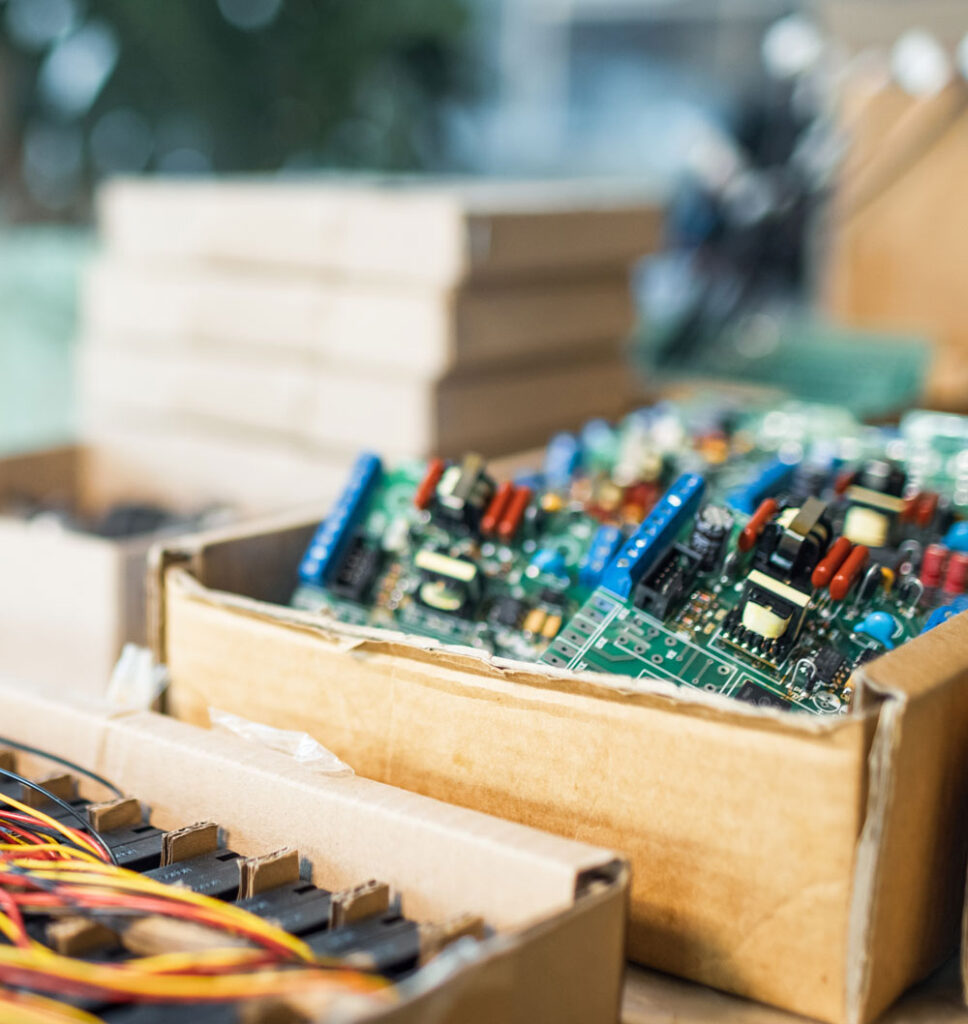
The rest of the materials arrive on schedule. The circuit boards are ready. Assembly labor is scheduled. But without that one component, the product cannot be completed.
The result may be delayed shipments, idle capacity, extra procurement work, and pressure to find a more expensive alternative.
Now consider the same situation with earlier forecasting. The OEM identifies the risk during production planning, confirms supplier availability, evaluates an approved alternative, and adjusts purchasing timing before the shortage affects the build.
The component constraint may still exist. The difference is that the business has more options.
That is the value of proactive planning: not eliminating every supply chain problem, but reducing the number of problems that become production emergencies.
How a Manufacturing Partner Can Help
Managing component risk requires more than watching market headlines. It requires visibility into the specific parts, suppliers, production schedules, and assembly requirements that affect your products.
An experienced electronics manufacturing partner can help coordinate component sourcing, review BOM risks, communicate potential supply constraints, and align assembly planning with realistic material availability.
For OEMs, that support can be especially valuable when demand changes quickly, or a product relies on components with limited sourcing options.
At Win2uit Electronics, manufacturing experience and communication matter because a circuit board is only useful when the right components are available, assembled correctly, and delivered when the customer needs them.
Planning ahead gives your team more opportunities to address supply issues before they affect production.
Don't Let Component Availability Set Your Production Schedule
The AI boom is creating a new wave of investment in computing infrastructure, and that investment is reshaping demand for parts of the electronics supply chain.
The numbers tell the story. Global data center electricity consumption is projected to more than double between 2024 and 2030, while memory market forecasts show continued price increases into late 2026. Not every OEM will experience a shortage, and not every component category will see the same price pressure. But relying on yesterday’s lead times and purchasing assumptions can leave manufacturers exposed when market conditions change.
The smartest response is to understand your BOM, forecast demand early, identify high-risk components, and maintain close communication with suppliers and manufacturing partners.
Because when one small component can hold up an entire product, planning is not just a purchasing task. It’s a production strategy.
Need a manufacturing partner that understands the importance of component planning and reliable production? Contact Win2uit Electronics to discuss your PCB assembly requirements.